

Mentorship: Part of the Fabric of CHTC
June 25, 2026Mentorship and learning go hand in hand at the Center for High Throughput Computing (CHTC), a culture the center director Miron Livny has built over the years. Students and fellows can be found across the CHTC, from the more than 700 students who have attended the 15 annual OSG School programs, through CHTC Summer Fellows, to student interns and science writers like myself.
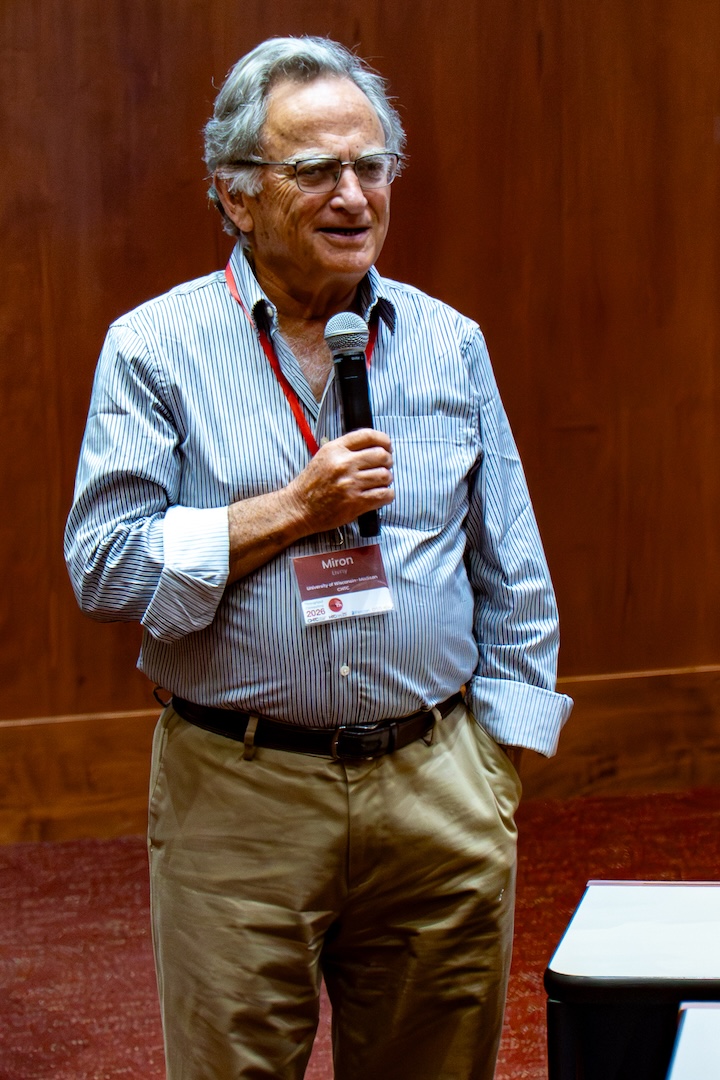
As a student science writer at the CHTC, I have to find a balance between writing and researching for the center and my school and class work. At times it can be a lot, but part of the reason I enjoy being part of the CHTC is because it offers a culture in which this search for a balance is an advantage. Livny remarks; “I hope we give you an opportunity to do something you can’t get if you would have been just doing your class work. That’s a privilege that you can do what is stimulating you, what is driving you.” As a team member, I have to shift from text-book learning in the classroom to real-world learning at the CHTC. But as Livny notes, it’s truly a privilege to get to have so many opportunities to learn and grow that aren’t strictly related to educational ones.

As an economics major with little computing experience myself, coming into this job I was unsure of how my skillset would fit into such a tech-heavy environment. I quickly realized that the work at the CHTC is translational, connecting research communities with computer science to advance discovery. Livny notes “When you do translational work, you have to communicate…you have to get funding to build dependable tools and users to come and use them. And that creates the opportunity for you as a communication writer. You are the success story.” Everyone at the CHTC has a different but equally important role to play in the translational process, whether that’s working directly on platforms like HTCondor or Pelican, or communications work that expands the awareness of the discoveries enabled.
The culture of the CHTC is very much a try, and if you don’t succeed, try again. Being able to write without the fear or pressure of being wrong is something I rarely experience in the classroom. Livny’s approach is not to only mentor students in the sense of the classroom, but also in the broader spectrum of life. The CHTC employs students across various teams, including research computing, system administration, web development, and communication. The work students and fellows do directly contribute to the fabric of work that allows researchers to develop their workflows and execute their jobs. William Jiang, CHTC Fellow and research software intern, reflected on his time at the center as he prepares to graduate: “The opportunity to contribute to real, large-scale distributed systems since last summer has been a highlight of my master’s.” Arnav Mohakud, systems administrator intern, noted “Working here has honestly been one of the highlights of my time at university. I’ve really enjoyed being part of the team and have learned so much, especially about distributed systems and systems administration.”


Pictured: CHTC student workers William Jiang and Arnav Mohakud.
Livny was recently recognized by UW–Madison with a Hilldale Award for his devotion to mentorship, research, and service. Although to Livny, the award is not just a reflection of himself, but “It is really an award to the CHTC. This recognition captures the spirit of the CHTC. It’s innovation and it is deployment that is used for teaching and service through the communities that we serve,” he remarked.
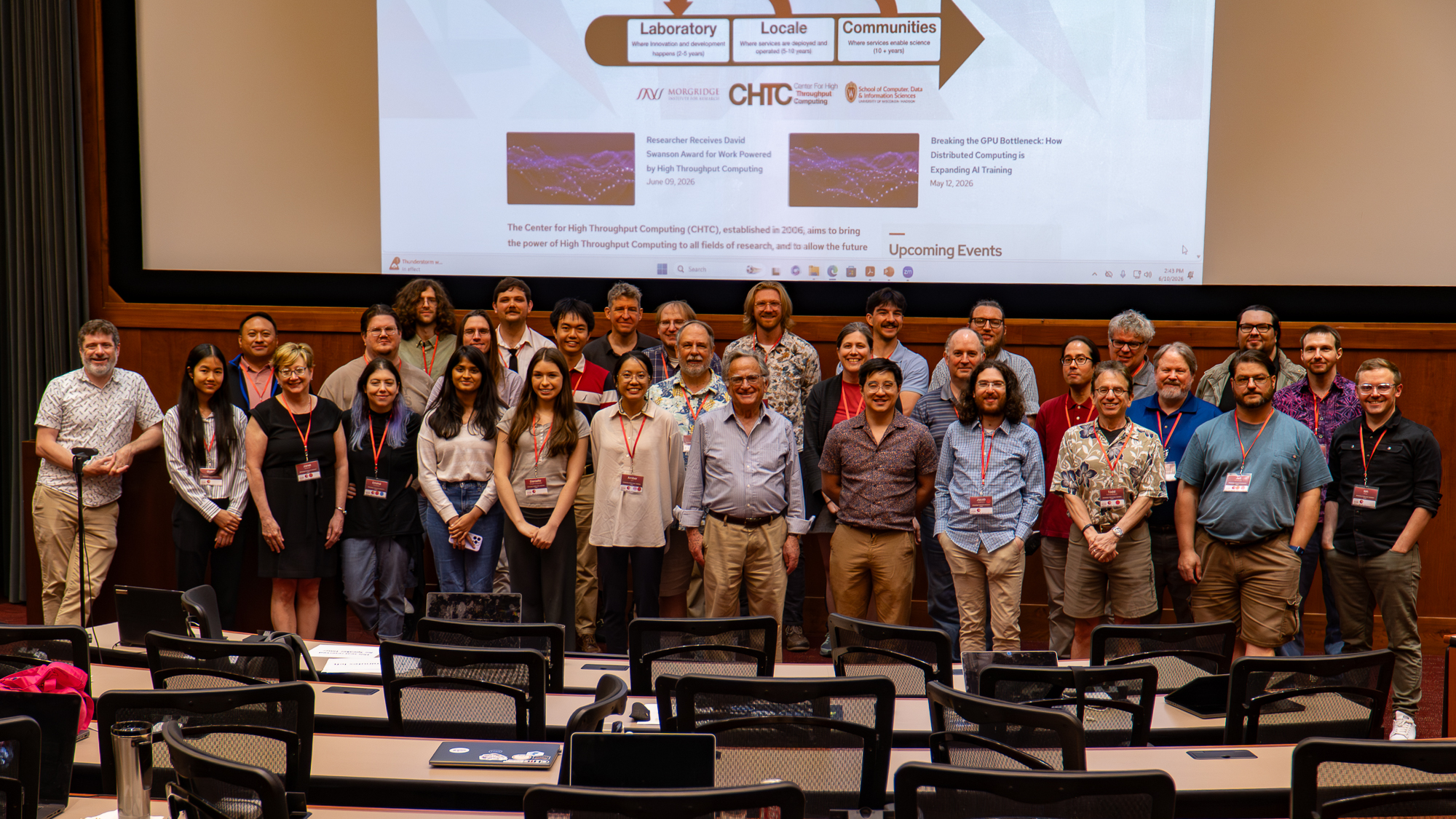
The recent Hilldale recognition is a further opportunity for him to teach and mentor, he notes: “The really rewarding part of the CHTC is that I could do it in a university where I could mentor and influence - help individuals to develop, to be better.” The CHTC is guided by the principle that “the proof of the pudding is in the eating.” Livny and his team have been making the “pudding” in the form of tools and services for over 40 years, creating a specialized workload management system used worldwide in the scientific community. The researchers and scientists who adopt it are the ones willing to “eat it,” to try it out and see if it truly helps advance their research work. There’s no doubt HTCondor proved that it “works,” managing millions of jobs, GPU hours, and supporting three Nobel prizes in physics and chemistry. But simply making the “pudding” isn’t quite enough, according to Livny, who says “The fact that somebody is willing to eat it doesn’t mean they will like it.” The “proof” – test and trial of the CHTC innovations and services - is where translational research comes in.